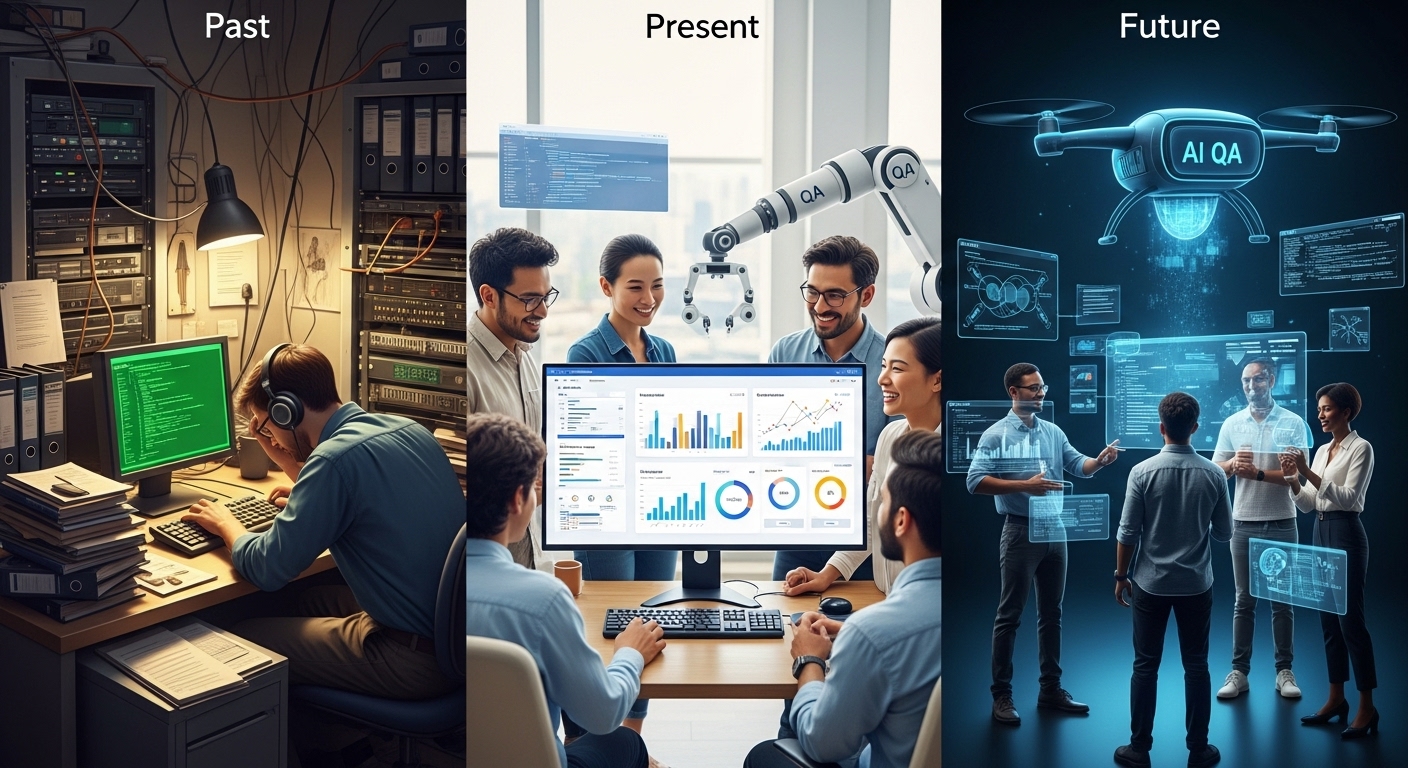
Automation has consistently changed how the world functions, starting with the invention of industrial machines and continuing with the development of artificial intelligence. What started off as a means of making manual labor easier has evolved into a vital component of productivity, innovation, and world advancement. We can better appreciate automation’s influence and get ready for the emergence of intelligent, autonomous systems by knowing how it has changed throughout time.
Let’s examine the history, current state, and prospects of automation.
The History of Automation’s Inception
When people first began employing machines to replace manual labor during the Industrial Revolution (18th–19th century), the history of automation began. Production was transformed by steam engines, textile looms, and early manufacturing devices, which brought consistency and speed that were impossible with just human hands.
Important turning points:
- 18th century: Slaw the development of mechanical tools such as the steam engine and spinning Jenny.
- 20th century: Henry Ford invented assembly lines, which allowed for mass production.
- Late 20th century: The rise of computers and robotics, marking the beginning of digital automation.
The foundation for the current technological era was laid by these early automation techniques, which revolutionized sectors like manufacturing, transportation, and agriculture.
The Current Era: Intelligent, Networked, and Data-Oriented
These days, automation is intelligent rather than merely mechanical. Automation systems are now smarter, quicker, and more connected than ever before because of developments in artificial intelligence (AI), machine learning (ML), and the internet of things (IoT).
The following major trends define modern automation:
Machine Learning and AI
With the ability to learn, adapt, and make decisions instantly, modern systems can increase accuracy while lowering the need for human intervention.
Automation of Processes
Robotic Process Automation (RPA) is being used by businesses to manage repetitive operations including customer service, invoice processing, and data entry.
Over-automation
Hyperautomation elevates automation to a new level by fusing AI, RPA, and analytics, allowing companies to automate intricate procedures from start to finish.
APIs and Cloud Integration
These days, automation uses API interfaces to link entire ecosystems, facilitating smooth data transfer between platforms and tools.
Effect on sectors:
- Manufacturing: Predictive maintenance and Internet of Things sensors in smart factories.
- Healthcare: Patient data management and automated diagnostics.
- Finance: automatic reporting and fraud detection powered by AI.
- IT & Business Operations: Time-saving and error-reducing workflow automation.
Better judgments, less expenses, and increased efficiency are the outcomes.
The Future:Intelligent Automation That Governs Itself
Intelligence,autonomy, and adaptability are at the heart of the future of automation. Collaboration between humans and machines will blur in the future, driving innovation across all sectors.
- What is forthcoming: Making Decisions Fueled by AI, automation systems will not only perform tasks but also analyze, make decisions,and optimize operations in real time.
- Cognitive Automation: Through the incorporation of AI, natural language processing, and analytics, systems will acquire the capability to understand context,intent, and emotion — thus revolutionizing customer interaction and support.
- Operations that are Completely Self-governing: In fields like logistics and manufacturing, self-managing systems driven by AI and real-time data will operate independently of human involvement.
- Cooperation between humans and machines: Rather than being replaced, humans will be empowered by automation. While intelligent systems handle repetitive tasks, humans will focus on creativity, innovation, and strategy.
- Robustness Through Smart Automation: Automation will play a vital role in improving resource use, reducing waste, and fostering worldwide sustainable business practices.Evolution
The Necessity of Business through Automation
It is no longer optional to automate; for growth and survival, it must be done. Firms that adjust obtain:
- Operational accuracy and efficiency
- Accelerated time-to-market for offerings
- Insights based on data for improved decision-making
- Enhanced experiences for both employees and customers
Those who resist may find themselves left behind in a world that is becoming more and more digital and autonomous.
SandyApps: Pioneering Tomorrow’s Automation
At SandyApps, we assist businesses in their evolution by creating intelligent automation systems that streamline workflows, boost productivity, and future-proof operations.
Whether it’s process automation or AI-driven integrations, we aim to make your operations more intelligent, quicker, and ready for the future.
Final Reflections
Automation has evolved from machines that follow our commands to intelligent systems that work alongside us. As the new era unfolds, automation will continue to drive innovation, transform industries, and uncover new growth opportunities.
Contact Us:

