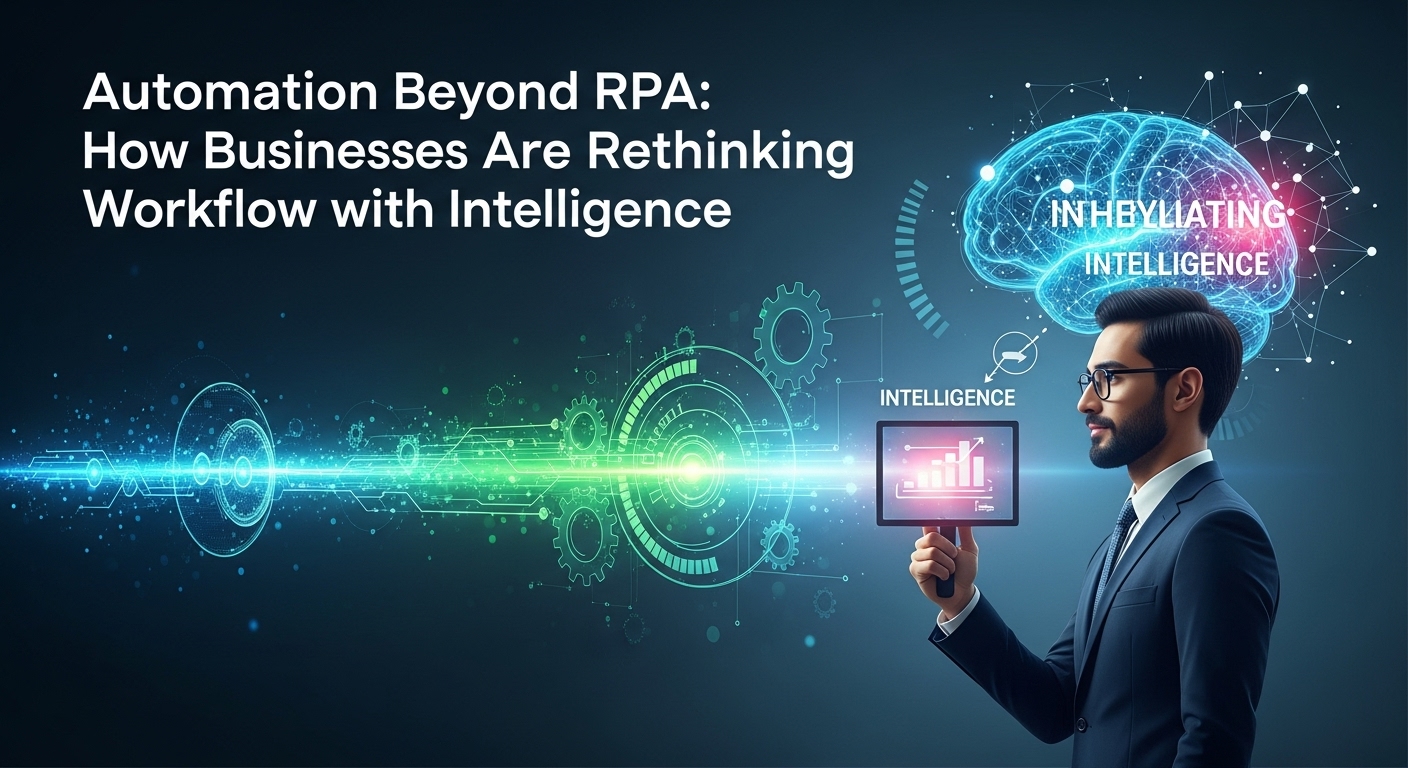
Robotic Process Automation (RPA) has served as a key element of digital transformation for years, simplifying repetitive tasks governed by rules and promoting efficiency in various sectors. Nonetheless with the advancement of technology business requirements also change. The next stage of automation transcends RPA; it involves intelligent automation which merges AI machine learning and data analytics to develop more intelligent and adaptive workflows.
Today’s businesses are not only automating tasks but also redesigning whole processes to enhance their intelligence, predictive capabilities and agility.
1. The Limitations of Traditional RPA
RPA has provided clear value by automating manual tasks such as data entry invoice processing and report generation. However, conventional RPA functions within rigid rule sets. Without human intervention bots find it difficult to adapt when exceptions arise or data changes unexpectedly.
This is the point at which intelligent automation comes into play combining RPA with AI and machine learning to manage intricate and fluid workflows.
2. Enter Intelligent Automation: A Smarter Approach
Intelligent automation (IA) builds on RPA by incorporating cognitive technologies that allow systems to learn reason and make decisions. In contrast to basic bots, intelligent systems are capable of data interpretation, context comprehension and even outcome prediction.
As an illustration:
- AI algorithms are capable of analyzing unstructured data such as emails and chat messages.
- Process bottlenecks can be identified and optimizations suggested by machine learning models.
- Natural Language Processing (NLP) enables systems to comprehend and react to human language instantaneously.
With this change automation will move from performing tasks to contemplating processes.
3. Real-World Applications of Intelligent Automation
Contemporary enterprises are embracing smart automation in multiple areas:
- Customer Support:AI chatbots and virtual assistants manage inquiries around the clock demonstrating a human-like comprehension.
- Finance:Predictive analytics and automated fraud detection enhance financial precision.
- Human Resources:Intelligent onboarding systems streamline repetitive HR tasks and improve the employee experience.
- IT Operations:Self-healing systems identify problems, resolve errors and implement fixes automatically.
These applications demonstrate the transformation of workflows by IA through the integration of automation with insight and adaptability.
4. Benefits of Moving Beyond RPA
Through a reassessment of automation that incorporates intelligence, companies obtain:
- Increased efficiency:With fewer points of manual interaction, processes operate at a quicker pace.
- Lowered Costs:Intelligent automation reduces rework and operational costs.
- Enhanced Precision:AI eradicates human mistakes and bolsters decision-making based on data.
- Scalability:Companies can effortlessly broaden automation across various departments and processes.
- Improved Customer Experience:Tailored and attentive exchanges foster deeper connections.
This evolution marks the shift from process automation to process innovation.
5. The Human + AI Collaboration
Automation’s future will not focus on human replacement but rather on human empowerment. Intelligent automation assumes control of analytical and repetitive tasks enabling employees to concentrate on work that is creative, strategic and customer-oriented.
This collaboration between humans and AI results in a more productive, agile and innovative organization, one that is prepared for the challenges of a digital-first economy.
6. Building an Intelligent Automation Strategy
In order to tap into the complete possibilities of automation beyond RPA businesses ought to:
- Spot processes that contain a lot of data but are repetitive.
- Incorporate AI and analytics into automation systems.
- Ensure that all departments work together to facilitate seamless adoption.
- Keep an eye on automated workflows and improve them as needed.
Organizations can attain genuine digital transformation by adopting a strategic approach grounded in data.
Conclusion
Automation is advancing, moving from the execution of simple tasks to making intelligent decisions. Companies that adopt intelligent automation are reshaping work processes and creating systems that are efficient, adaptive and insightful.
SandyApps supports businesses in transcending conventional automation through the adoption of AI-driven workflow solutions that merge efficiency, intelligence and innovation aiding you in maintaining a competitive edge in a constantly evolving digital environment.
Contact Us:

