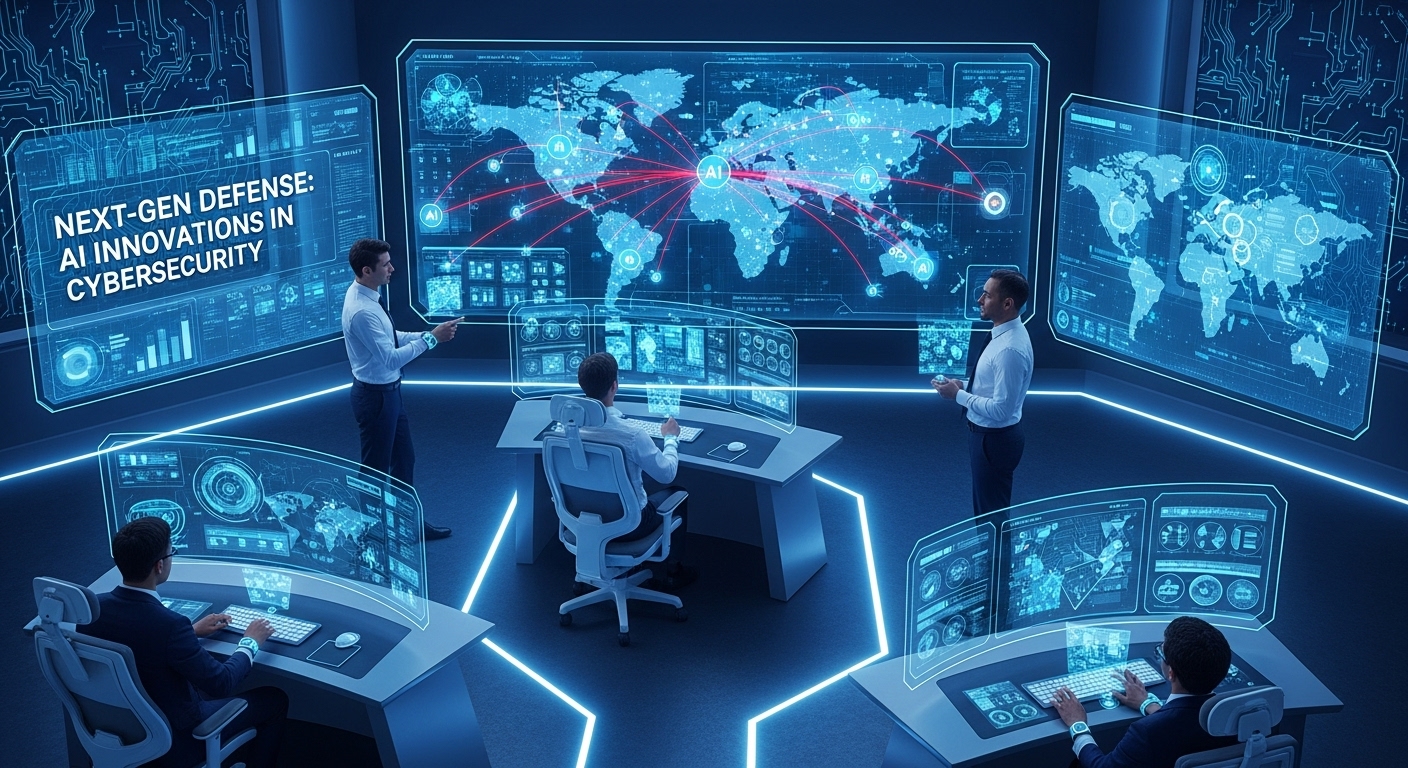
The dangers facing the digital world are always changing along with it.Even if they are still crucial,traditional cybersecurity measures are unable to stop the sophistication and size of contemporary cyberattacks.The next generation of defensive technologies, which are revolutionizing how businesses identify,stop,and react to threats, are powered by artificial intelligence (AI).
AI in cybersecurity is a revolution that is redefining digital protection, not just a technical advancement.
1. The Changing Environment of Cyberthreats
Cybercriminals are increasingly breaking into systems more quickly than ever before by employing sophisticated tactics,such as AI-generated attacks and phishing automation.Reactive protection tactics and manual monitoring are unable to keep up with these ever-changing threats.
This is the role of AI-powered cybersecurity,which uses data analytics and machine learning (ML) to anticipate, detect,and stop assaults instantly.AI systems,in contrast to conventional technologies, automatically adjust to new risks and continuously learn from data patterns.
2. Threat Detection and Prevention Powered by AI
Predictive threat detection is one of AI’s most important contributions to cybersecurity.AI can detect irregularities that point to possible breaches before they occur by examining vast volumes of data, including user behavior and network traffic.
Machine learning algorithms,for instance, can quickly identify suspect file transfers or odd login behavior, cutting down on detection time from hours to seconds.Businesses are able to prevent risks before they actually cause harm because of this proactive approach.
3. Incident Response Automation
Additionally, AI is essential for automating incident response.AI solutions can autonomously isolate compromised devices, stop malicious processes, and notify IT personnel right away—all without the need for human intervention.
Mean Time to Detect (MTTD) and Mean Time to Respond (MTTR), two important measures that assess how rapidly businesses recover from cyber disasters, are decreased by this degree of automation.Reduced downtime and a smaller cost effect result from quicker reaction times.
4. Strengthening Network and Endpoint Security
Protecting an increasing number of devices and endpoints is necessary for modern cybersecurity, particularly in remote and hybrid work contexts.AI-powered endpoint security solutions are able to automatically install security patches,identify vulnerabilities,and continually monitor connected devices.
Similar to this,AI-enhanced intrusion detection systems (IDS) and firewalls may dynamically adjust to new threats,increasing accuracy and reducing false positives that frequently beset conventional systems.
5. Using AI and Predictive Analytics to Manage Risk
Predictive AI is more than just real-time security.Businesses can foresee possible security threats, model attack scenarios,and fortify their systems’ vulnerabilities before attackers take advantage of them by utilizing predictive analytics.
Organizations can strengthen their digital infrastructures and make more informed cybersecurity expenditures thanks to this data-driven risk management.
6. AI’s Place in Cybersecurity Plans
Using AI in cybersecurity requires strategy as much as technology.For adaptive learning, real-time analytics, and ongoing monitoring, businesses need to incorporate AI tools into their overall security operations center (SOC).
However, the risks associated with AI increase with its power.An emerging problem is adversarial AI, in which hackers utilize AI to outsmart protection systems.Businesses must counter this by combining AI-driven technologies with skilled human oversight,resulting in a resilient and adaptable human + AI protection ecosystem.
7. The Future: Intelligent Defense Systems That Learn on Their Own
Autonomous, self-learning defense systems that can recognize and eliminate threats with little assistance from humans are the key to the future of cybersecurity. AI will make it possible to create hyper-intelligent security frameworks that change in tandem with the threat landscape when combined with automation.
Businesses that use AI in cybersecurity in 2025 and beyond will not only safeguard their resources but also obtain a competitive advantage in terms of innovation, trust, and compliance.
In conclusion
AI, automation,and astute insights are driving cybersecurity into a new era.Real-time threat detection,analysis,and response capabilities provide enterprises the flexibility and assurance they need to function safely in a digital environment that is changing quickly.
With AI-driven cybersecurity solutions that integrate automation,analytics,and professional planning, sandyApps helps businesses bolster their defenses and keep their digital assets safe,robust,and prepared for the future.
Contact Us:

