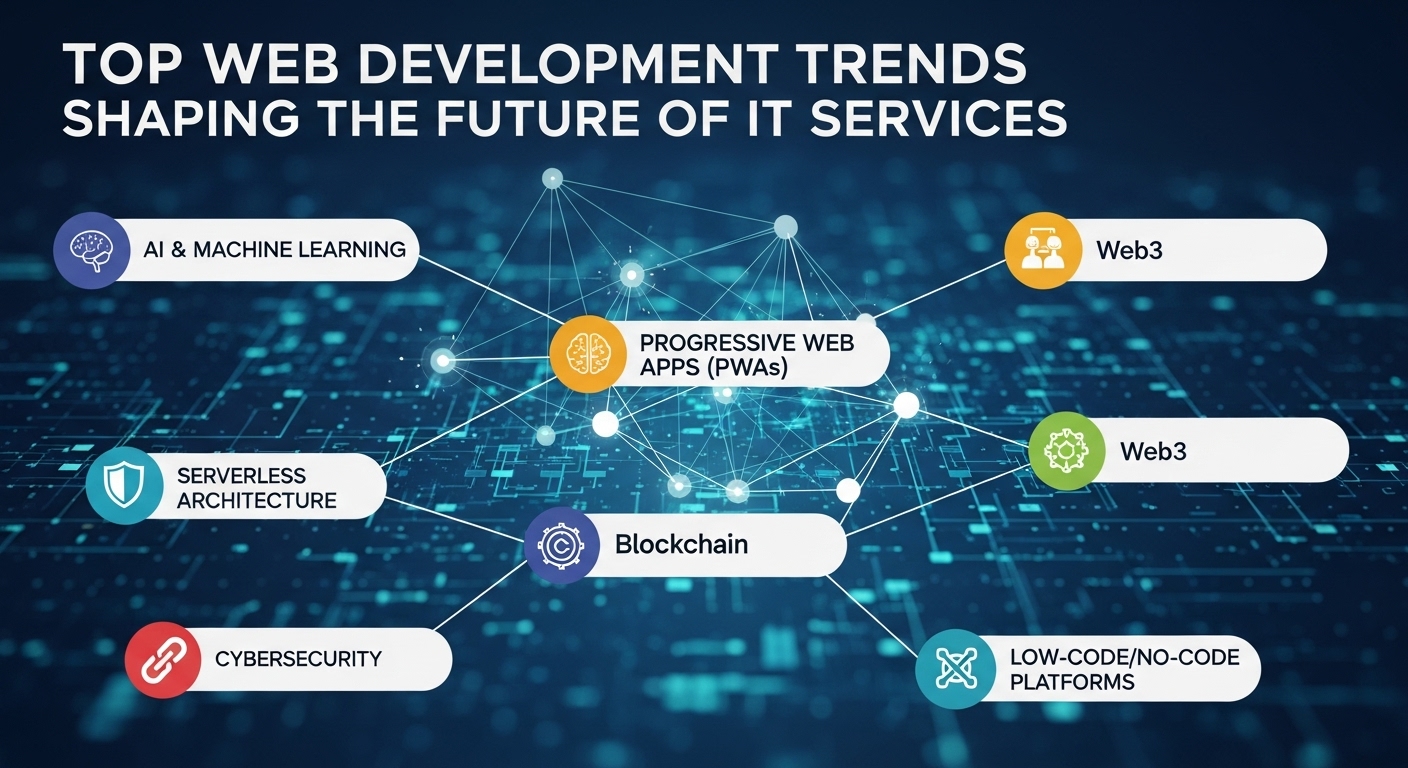
1. Progressive Web Apps (PWAs)
PWAs blend web and mobile app features, offering fast, reliable experiences with offline access and push notifications. They reduce development costs by eliminating the need for separate iOS and Android apps, improve user engagement, and boost SEO. Brands like Starbucks leverage PWAs for seamless experiences.
2. AI and Machine Learning Integration
AI and ML power personalized web experiences through chatbots, recommendation engines, and predictive analytics. These technologies enhance user satisfaction and streamline operations for IT services. Developers skilled in TensorFlow or PyTorch are in demand to build intelligent systems.
3. Architecture without servers
Developers can concentrate on developing since serverless computing makes infrastructure administration easier. It provides quicker implementation, scalability, and cost effectiveness. IT providers may create scalable online solutions that efficiently manage traffic spikes with the aid of platforms like AWS Lambda.
4. Performance-Oriented Jamstack
Fast, safe static websites with dynamic functionality through APIs are provided by Jamstack (JavaScript, APIs, Markup). IT services can now build high-performance websites with better SEO and scalability thanks to frameworks like Next.js and Gatsby.
5. Optimization for Voice Search
Voice search optimization is required for voice-activated gadgets like Alexa. To answer conversational queries and increase user engagement, websites need to use natural language keywords, schema markup, and local SEO for hands-free searches.
6. WebAssembly with an emphasis on performance
Browser-based apps, such video editors and games, may function nearly natively thanks to WebAssembly (Wasm). Wasm is used by IT providers to provide quick, cross-platform solutions that meet the demanding performance requirements of their customers.
7. Platforms with Low-Code/No-Code
Webflow and Bubble are examples of low-code and no-code platforms that enable non-technical individuals to create web applications, accelerating development and cutting expenses. IT services can swiftly prototype and implement solutions thanks to these tools.
8. Emphasis on Cybersecurity
Web development places a high priority on security through HTTPS, secure APIs, and frequent audits in light of the growing cyberthreats. IT services provide adherence to the CCPA and GDPR while fostering confidence through strong security procedures.
9. Micro-Interactions and Motion User Interface
Motion UI uses minor motions, such as spinning loaders, to increase user attention. A CSS spinning loader, for instance, can show the loading states:
10. Development Based on APIs
Strong APIs are given priority in API-first strategies to ensure smooth platform integration. IT services can create scalable, future-proof apps with the use of frameworks like GraphQL.
Conclusion
PWAs, AI, serverless, and Motion UI are some of the innovations that will change IT services in 2025. Providers may ensure competitiveness in a changing digital landscape by implementing these advances and offering quick, safe, and interesting web solutions.
Contact Us:

